

Why Are Zhihu and Douyin So Addictive? A First Look at How Recommendation Systems Work
Introduction to Recommendation Systems A recommendation system (Recommender system) is an important tool that helps users discover content and overcome information overload. By analyzing user behavior and modeling user interests, it predicts users' interests and makes recommendations. Clay Shirky, an American writer who studies the internet's impact on society and the economy, once said: "The problem facing humanity is not information overload, but filter failure." Taobao, Amazon, NetEase Cloud Music, Instagram, and major video sites all use recommendation systems to give users
目录8 个章节
Introduction to Recommendation Systems
A recommendation system (Recommender system) is an important tool that helps users discover content and overcome information overload. By analyzing user behavior and modeling user interests, it predicts users' interests and makes recommendations.
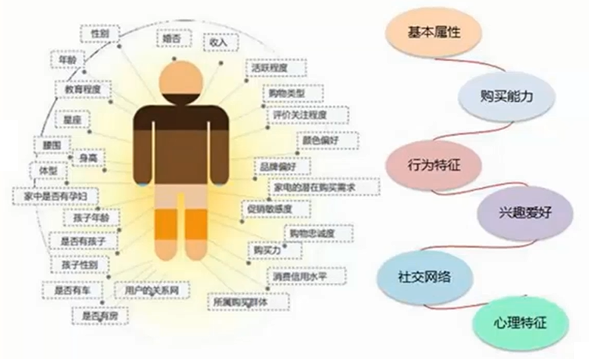
Clay Shirky, an American writer who studies the internet's impact on society and the economy, once said: "The problem facing humanity is not information overload, but filter failure." Taobao, Amazon, NetEase Cloud Music, Instagram, and major video sites all use recommendation systems to recommend various products users might be interested in—books, movies, music, electronics, and more. For users, recommendation systems are like "smart" filters that help them quickly find what they desire. For businesses, recommendation systems are content-driven and generate revenue.
Classification of Recommendation Systems
Based on whether they recommend different data to different users
- Based on mass behavior (recommended by the site administrator themselves, or currently popular items calculated from feedback statistics of all users in the system)
- Personalized recommendation engines (help you find like-minded friends with similar tastes, then make recommendations on that basis)
Based on their data sources
- Demographic-based (users of the same age or gender are judged to be similar users)
- Content-based (items have the same keywords and tags; human factors are not considered)
- Collaborative filtering-based recommendations (discover correlations among items, content, or users for recommendations; divided into three subclasses, discussed below)
With the development of Web 2.0, websites have increasingly encouraged user participation and user contributions, and thus collaborative filtering-based recommendation mechanisms emerged. The principle is simple: based on users' preferences for items or information, discover correlations among the items or content themselves, or discover correlations among users, and then make recommendations based on these associations.
Based on how they are built
- Based on items and users themselves (a user-item two-dimensional matrix describes user preferences; clustering algorithms)
- Association rule-based (The Apriori algorithm is one of the most influential algorithms for mining frequent itemsets of Boolean association rules)
- Model-based recommendations (machine learning; so-called machine learning means letting computers continuously learn like the human brain, and is a subfield of artificial intelligence)
Classified by recommendation method
- Content-based recommendation
- Collaborative filtering recommendation
- Association rule-based recommendation
- Utility-based recommendation
- Knowledge-based recommendation
- Hybrid recommendation
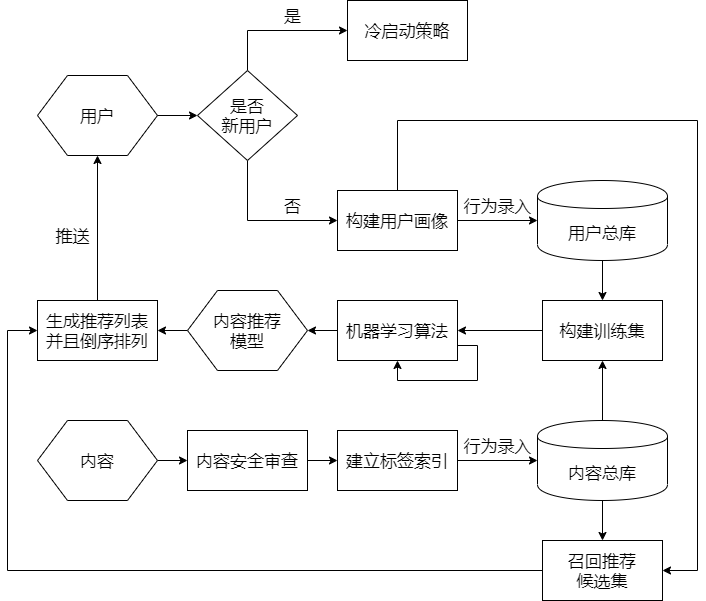
Recommendation System Workflow
Welcome to Discuss
I've compiled a series of technical articles and materials. Reply with linux, flutter, c#, netcore, android, java, python, and so on in the backend of the WeChat official account "Programming Lab" to get related technical articles and materials. If you have any questions, you can also leave a message in the official account backend~
_EOF_
Why Are Zhihu and Douyin So Addictive? A First Look at How Recommendation Systems Work
- 本文作者:
- 程序设计实验室
- 版权声明:
- 本博客所有文章除特别声明外,均采用 BY-NC-SA 许可协议。转载请注明出处!
相关文章
抖音头条为什么这么火?揭秘推荐系统原理之协同过滤算法
上一篇文章简单介绍了推荐系统的基本原理和分类,本文着重介绍协同过滤的原理与实现~ 协同过滤 协同过滤(collaborative filtering)通过利用某兴趣相投、拥有共同经验之群体的喜好来推荐用户感兴趣的信息。 协同过滤算法最大限度的利用用户之间,或物品之间的相似相关性,而后基于这些信息的基础上实行推荐。比如说,你和你的某个好友都喜欢听音乐,而你们所喜欢的曲风都差不多,你的好友对于某一首歌
2021-12-18 · 推荐系统 · 约 1 分钟
用 dnot.sh 替代 Windows Defender
dnot.sh 往安全中心塞了个假 AV 签名,Defender 就乖乖下岗了——至少监控上看。实际还得再跑 extra-strip.bat 才能真关,这两步缺一不可,属实有点折腾。搞定即裸奔,胆子小的别碰。
2026-09-17 · Windows · 约 1 分钟
设置Linux默认的文件管理器
搜索了半天,也试了很久。 用以下命令可以: 使用Xfce的文件管理器 xdg-mime default Thunar.desktop inode/directory thunar.desktop换成你想要的文件管理器名称 再不行就只能把原来的那个文件管理器卸载掉= =。 我比较喜欢用Gnome的文件管理器: xdg-mime default org.gnome.Nautilus.desktop i
2025-10-27 · 系统配置 · 约 1 分钟
点咖啡不再纠结:了解常见咖啡种类及口味
咖啡入门指南:轻松选择适合你的那杯
2025-10-28 · 2024 · 约 1 分钟
讨论
共 0 条加载评论中…