

Lenovo Lecoo Douzhanzhe Zhan 7000X Late Unboxing
The Douzhanzhe Zhan 7000X crams a 245HX + 5060 into a 2kg thin-and-light chassis. Gaming performance is decent, but the price doesn't quite play along. 512GB QLC, 16GB of RAM, and a Tianma panel feel a bit stingy; even dual stress couldn't hold 180W, and the control software is so bare-bones it looks like a rush job. Thinness is the highlight. Value for money? Sold out right after launch—rather in keeping with the arrogance of a limited-run product.
目录20 个章节
Preface
I originally wanted to write a launch-day unboxing, but I kept putting it off and it turned into a late review 😂
I set an alarm and bought the Lecoo Douzhanzhe Zhan 7000X on its August 4 launch. At the time I thought I'd have to rush to grab one, but that was overthinking it—it went on sale at 10 AM and only sold out around 2 PM 😑
After the launch, though, it doesn't seem to have been put up for sale again. Probably just this one batch.
As for the price, it doesn't really count as good value. I bought the lower-spec 245HX white version for 8,067 yuan, about a hundred more than the black one.
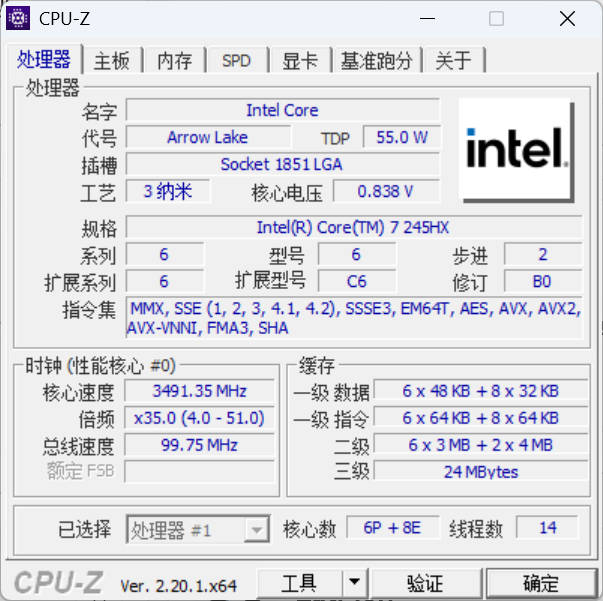
I only found out later that the lower-spec Core 7 245HX is actually a rebadged Core 5 😅
ok, even though this laptop isn't cheap, looking at the current market, paying eight thousand for a 5060, 16GB of RAM, and 512GB of storage is honestly a bit grating. Compared with most gaming laptops back in August, it doesn't really count as good value either. Still, the Zhan 7000X's biggest trait is how thin and light it is—other gaming laptops start at 2.3kg, this one is 2kg.
Unboxing
This laptop is also a national-subsidy product. This year's subsidy process got more annoying: after it arrives you have to unbox it and take photos.
So I won't photograph the packaging.
Straight to the laptop itself.
The Laptop & Comparison
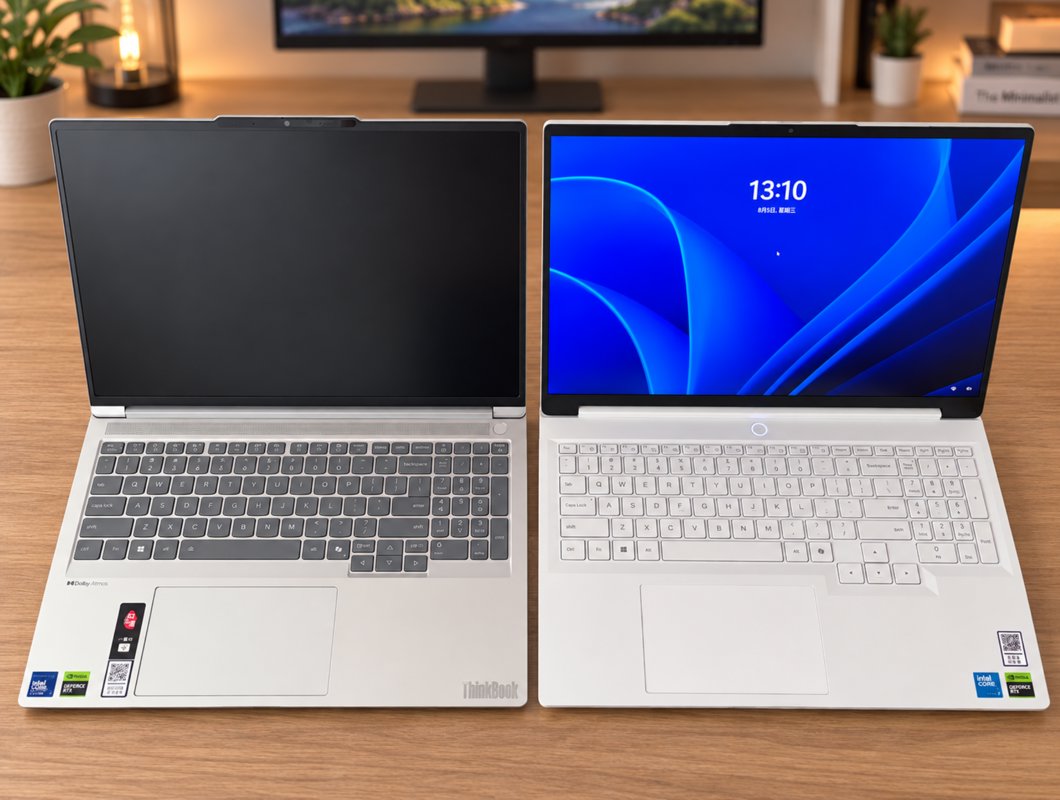
This time I'll compare it directly with the ThinkBook 16+ 2026 discrete GPU edition I bought earlier.
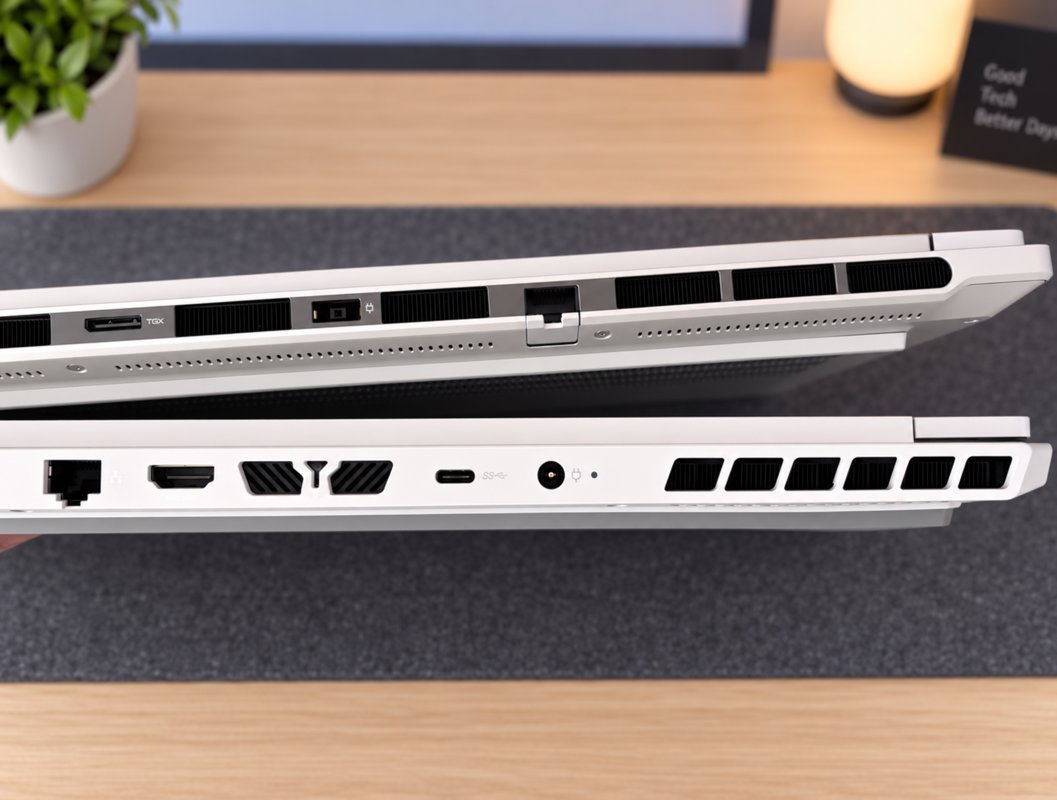
The one on top is the TB16+, the one below is the Zhan 7000X. The difference in build feel is still quite large, since the former has an all-metal chassis while the latter only has metal on the A and D covers.
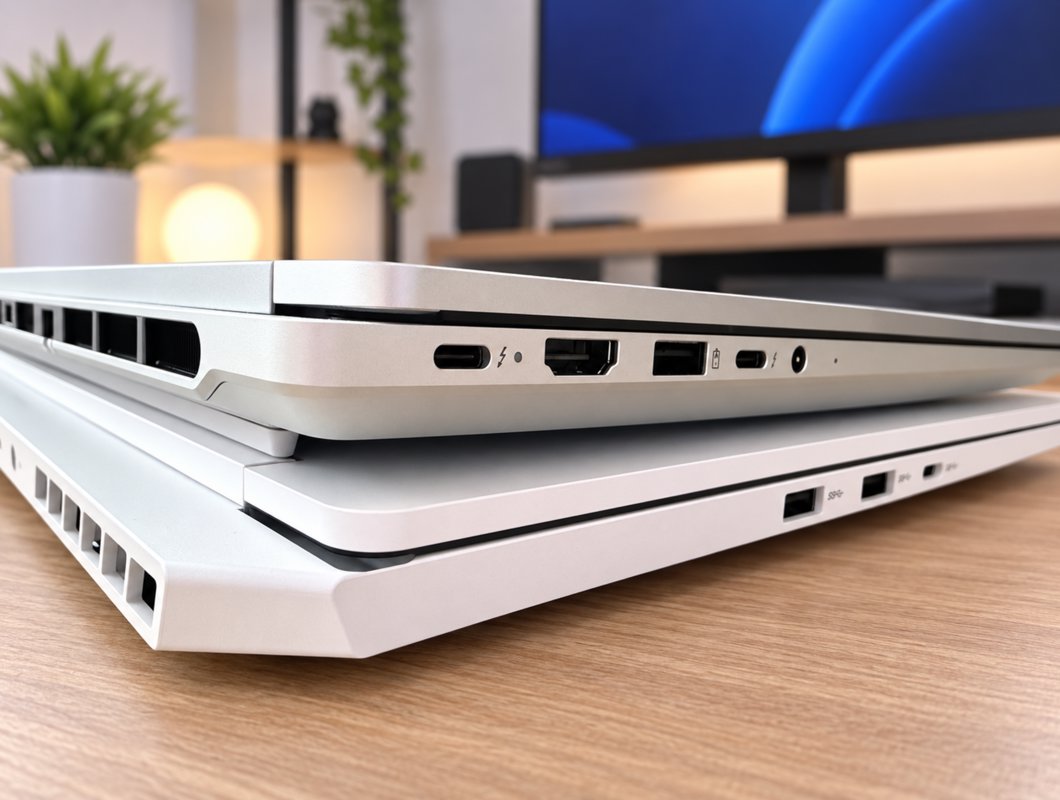
Rear port comparison.
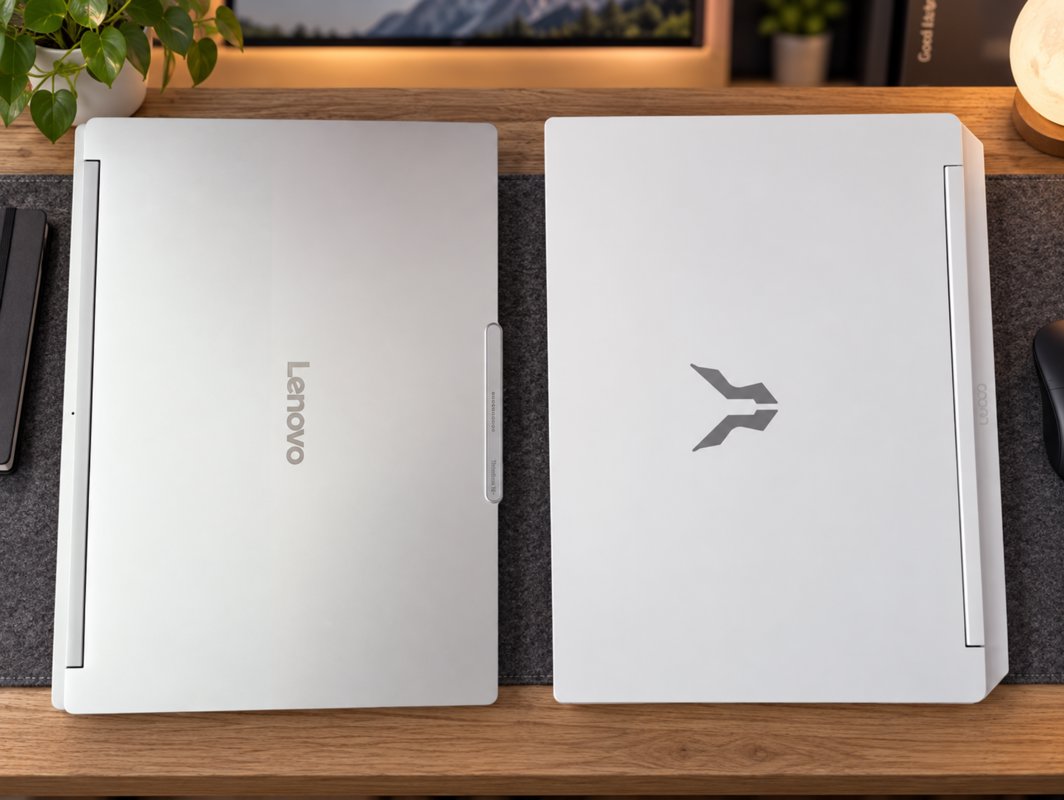
A-cover comparison.
Each ugly in its own way 😂. The TB16+ is ugly because of Lenovo, while the Zhan 7000X's logo is next-level 🤣
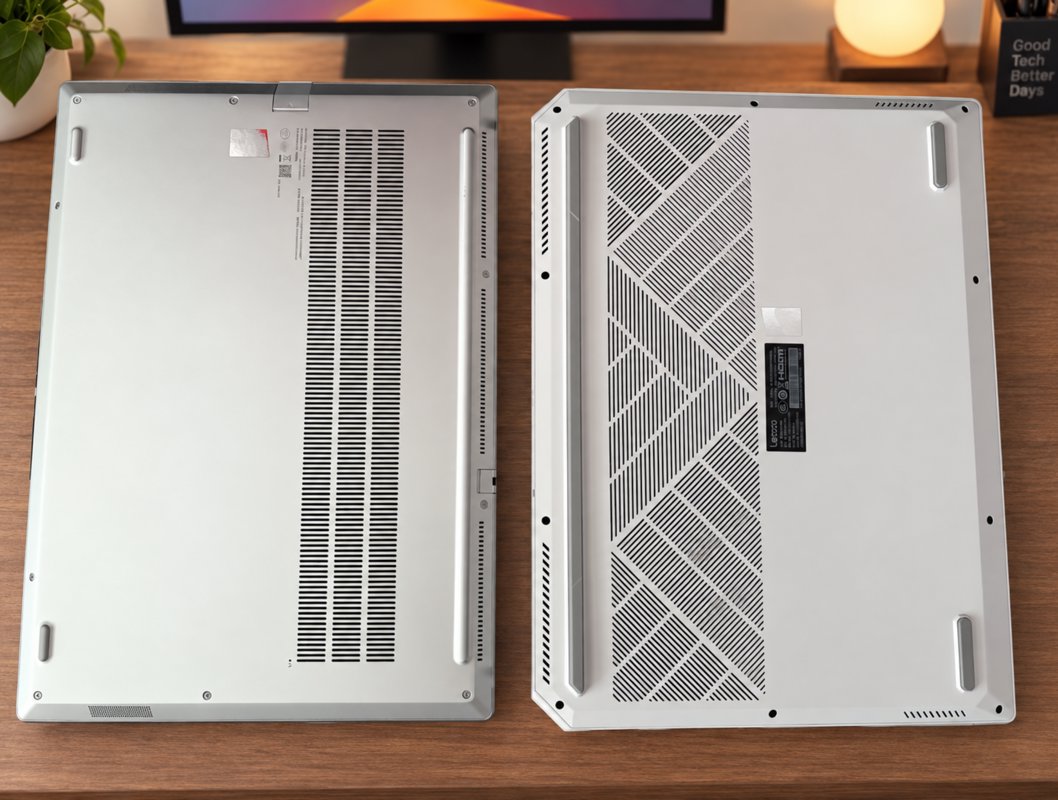
D-cover comparison. These look about the same.
B- and C-cover comparison.
TB16+ on the left, Zhan 7000X on the right. Gotta say, Lenovo really loves sticking stickers on a laptop's C deck—so ugly 💢
Standalone Shots
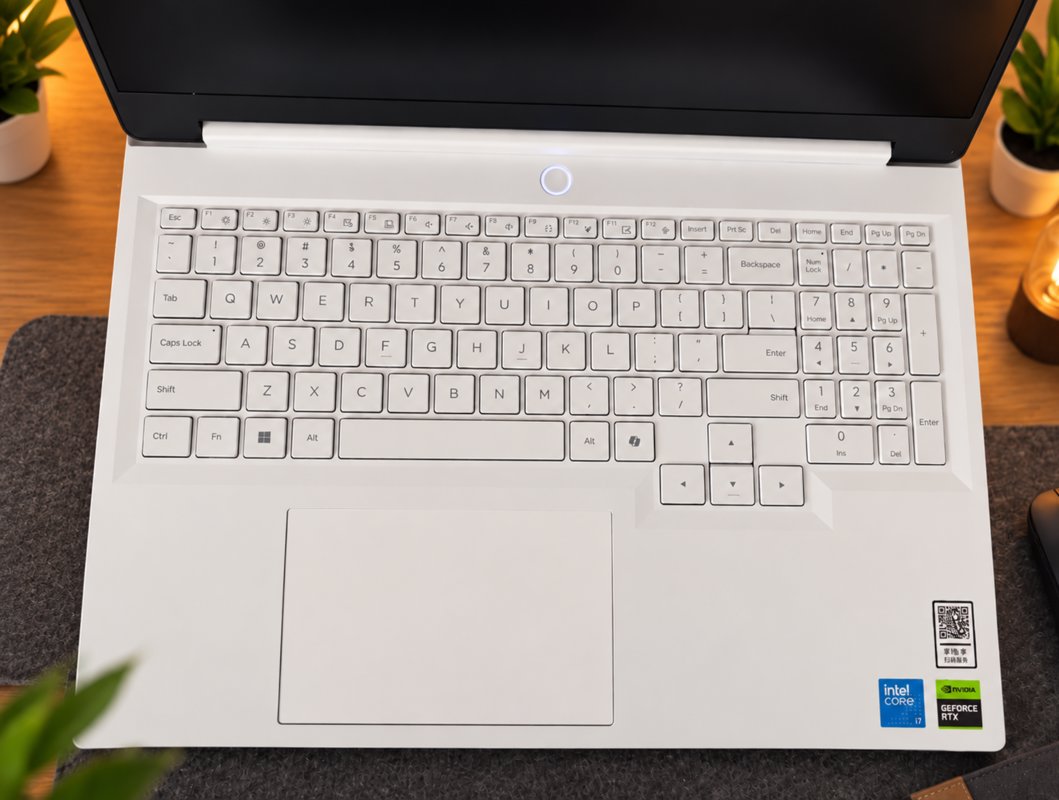
Photo editing is such a hassle. Make do with these.
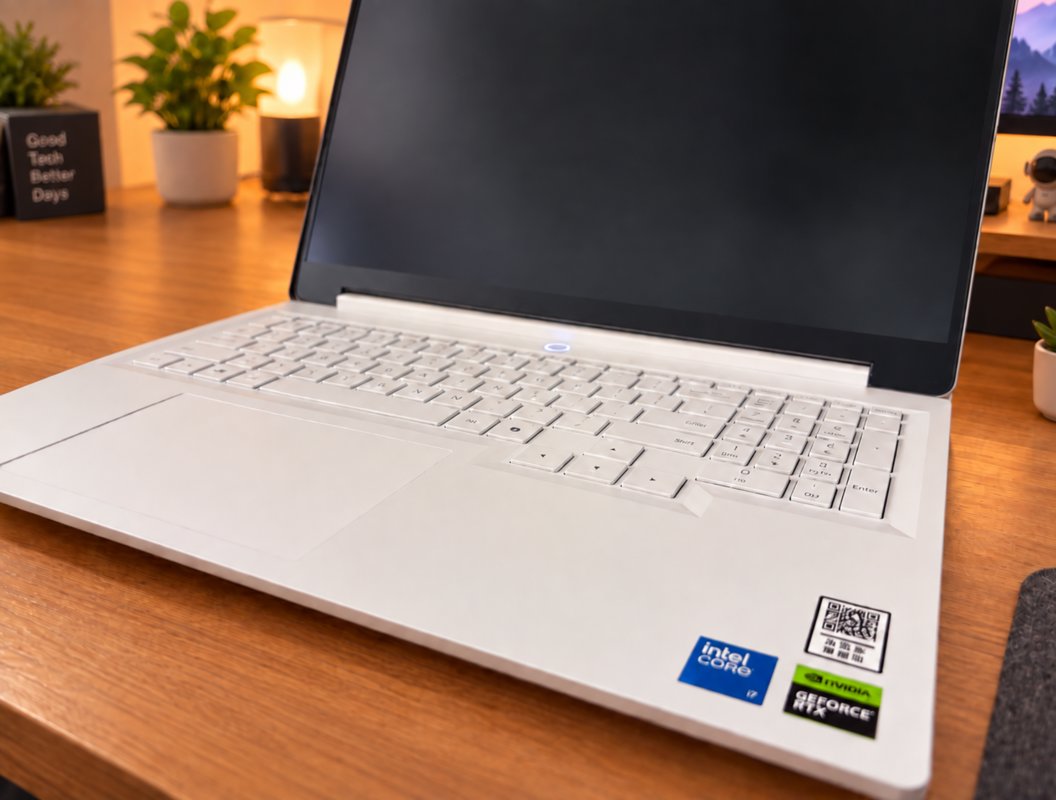
Front
Charger
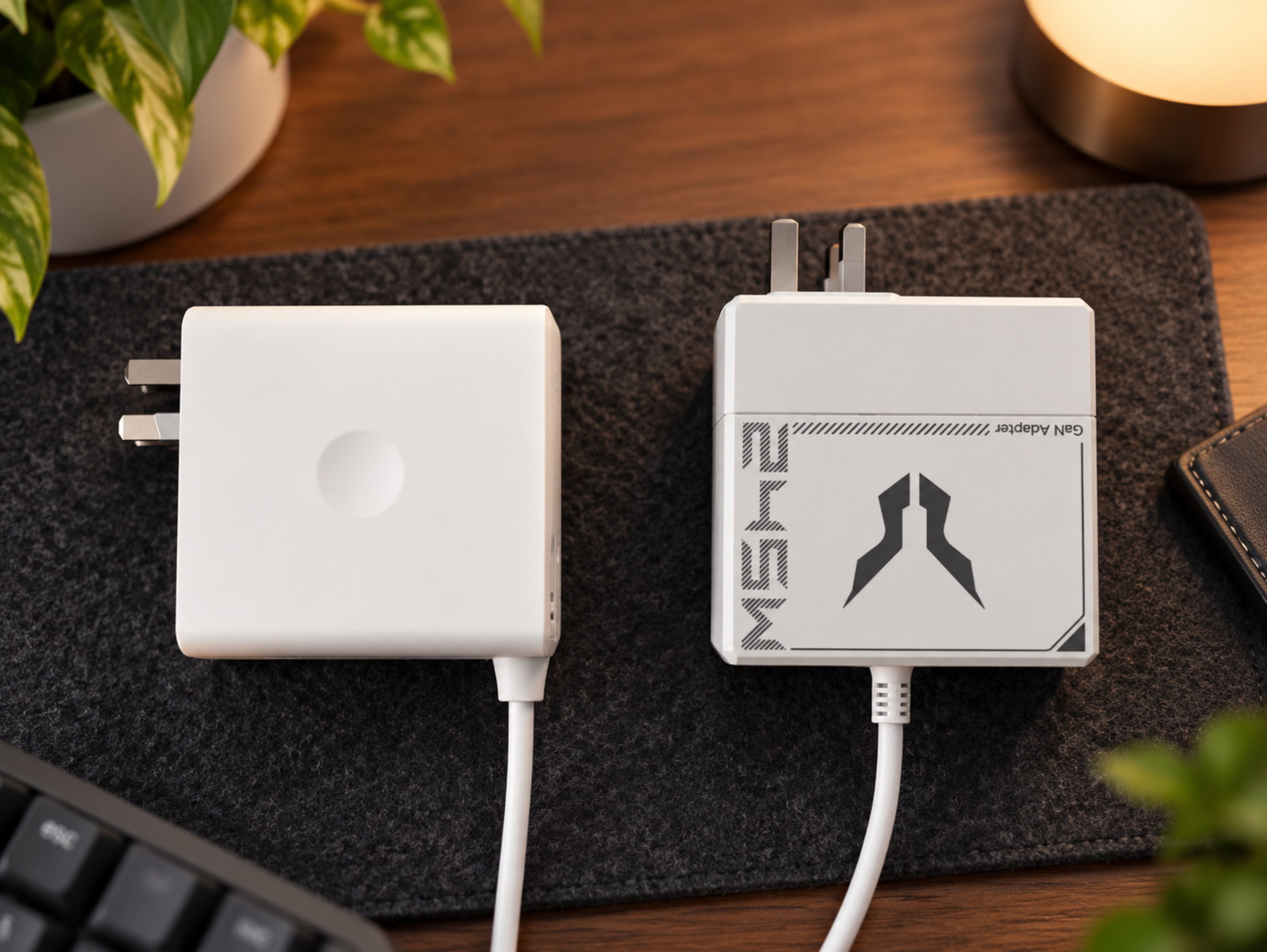
The included charger is the same 245W three-prong GaN brick as the Legion's (rightmost in the photo below), and they even thoughtfully matched a white version to the chassis color.
The leftmost one in the photo is the charger from my previous ThinkBook 16+, also a 245W GaN unit. I think the TB16+ one is a bit better—it doesn't bend the cable end when you plug it in.
On shopping platforms right now, the left one is 300 yuan, the right one a bit over 200.
Hardware Info
After unboxing and checking that the laptop's exterior is fine, the next thing to do is power it on and test.
As usual, let's look at the various component info first.
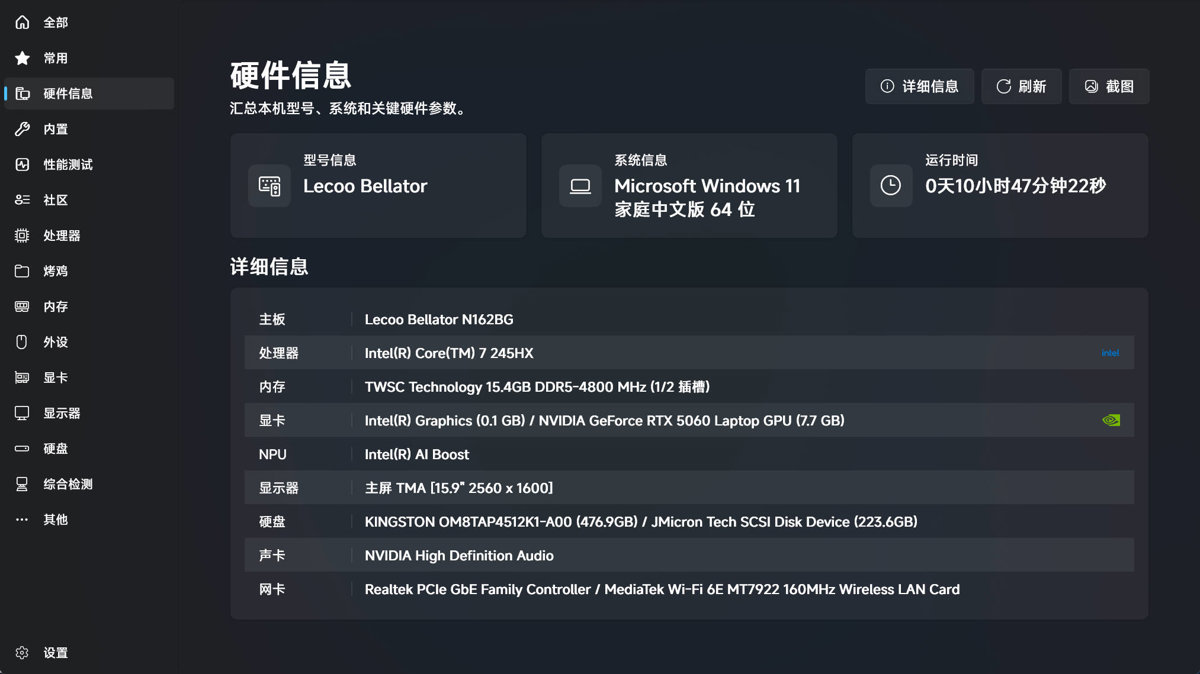
SSD Info
The Zhan 7000X's SSD is a KINGSTON OM8TAP4512K1-A00, a cheap OEM system drive with QLC NAND.
PS: Before launch there were a handful of review videos on Bilibili. I suspect those may have been media units; one uploader's review said the 251HX version came with a 1TB SSD using Yangtze Memory TLC NAND.
This isn't the worst no-name NAND. Kioxia BiCS6 itself is a relatively new 162-layer die, and the TC2201 is a Gen4 controller with decent performance. When the drive is empty and the SLC cache is plentiful, speeds are fine. That cache is around 100GB; once you go past it, speeds drop sharply.
Specs as follows
- Capacity: 512GB
- NAND: Kioxia BiCS6 QLC
- NAND architecture: 6th-gen BiCS, 162-layer 3D NAND
- Controller: TenaFe TC2201
- Cache scheme: No dedicated DRAM cache; uses HMB host memory buffer
- Interface: PCIe 4.0 ×4, NVMe
- Channels: 4-channel
- Rated sequential read: 5900MB/s
- Rated sequential write: 3700MB/s
- Rated random read/write: 550k/630k IOPS
- Endurance: 160TBW
- Max write power: 3.5W
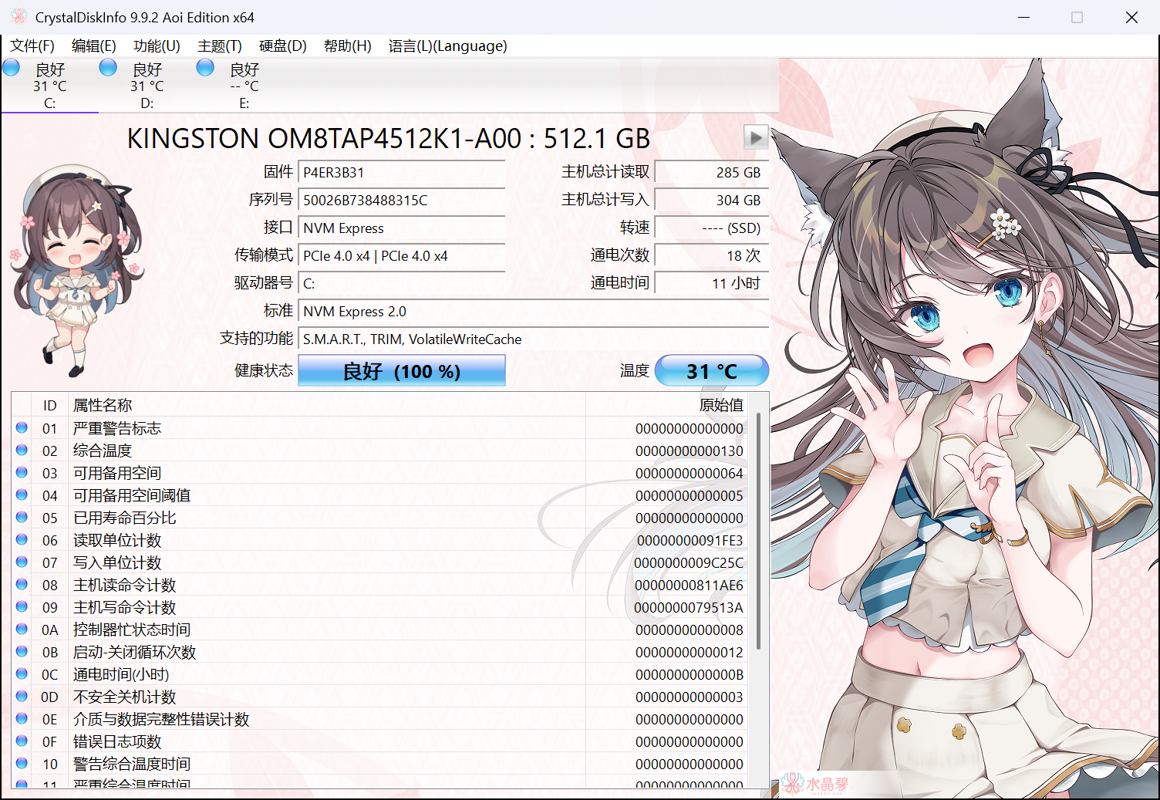
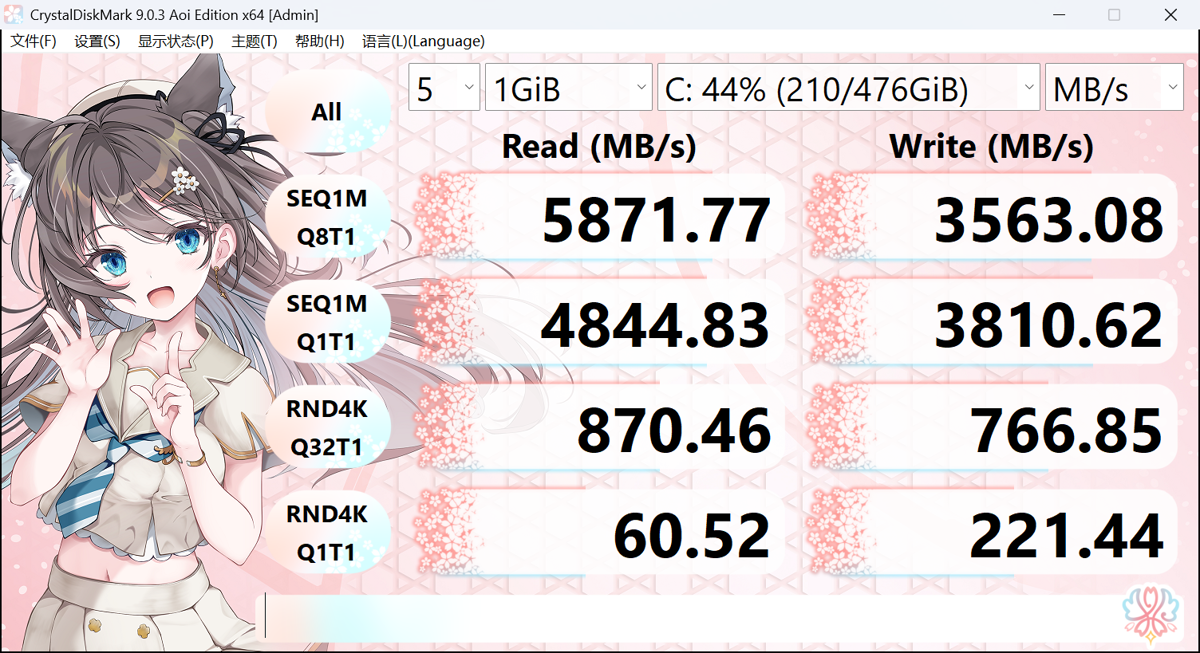
SSD Benchmark
When the SLC cache is plentiful, the speed is still fine.
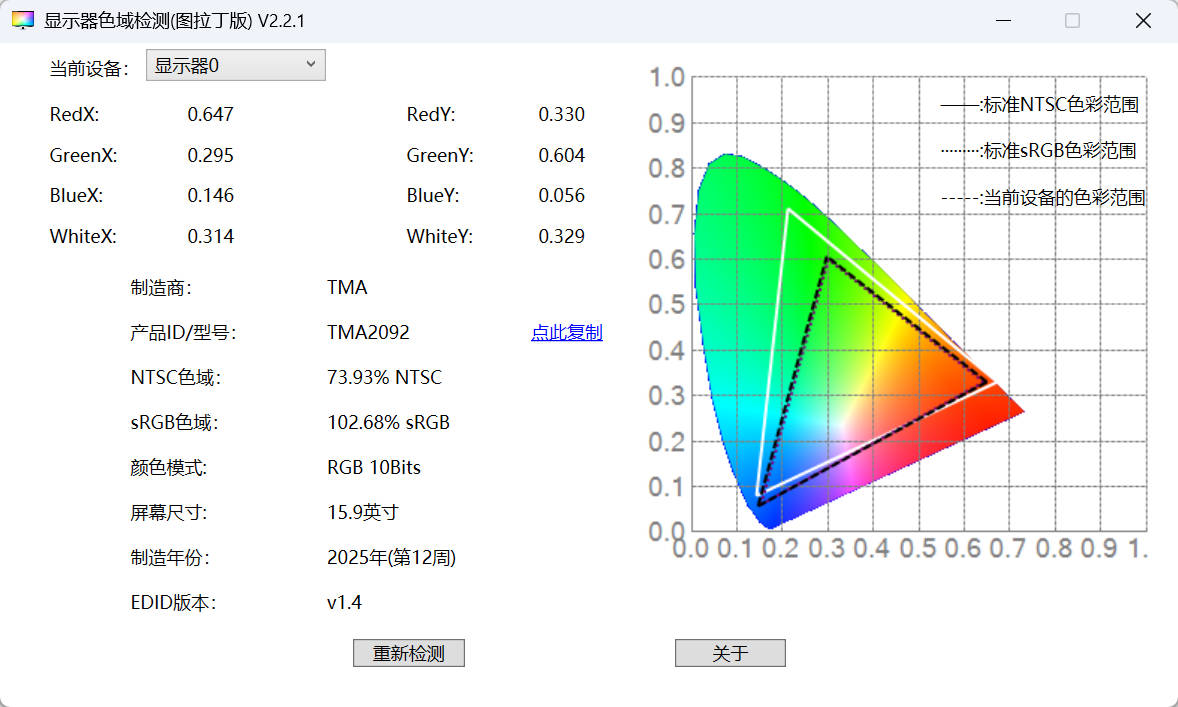
Display
Mine is a Tianma panel. Before launch, those few Bilibili review videos—possibly media units—had better screens; the BOE panels' color gamut coverage was quite a bit better than this Tianma one I have on hand.
But this lower-spec version has to cut costs, so I get it.
CPUZ
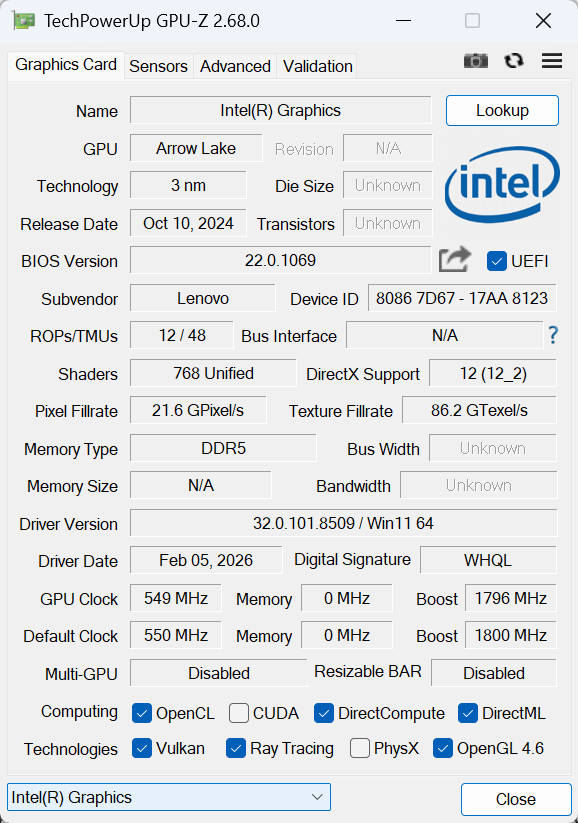
GPU-Z - iGPU
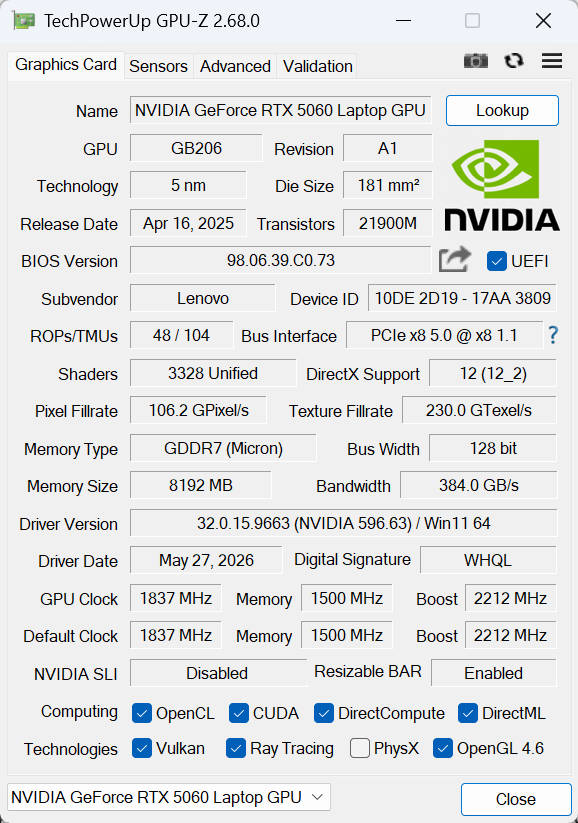
GPUZ
Stress Tests
Control Center
Let's look at the control center first.
This Douzhanzhe control center is pretty bare-bones.
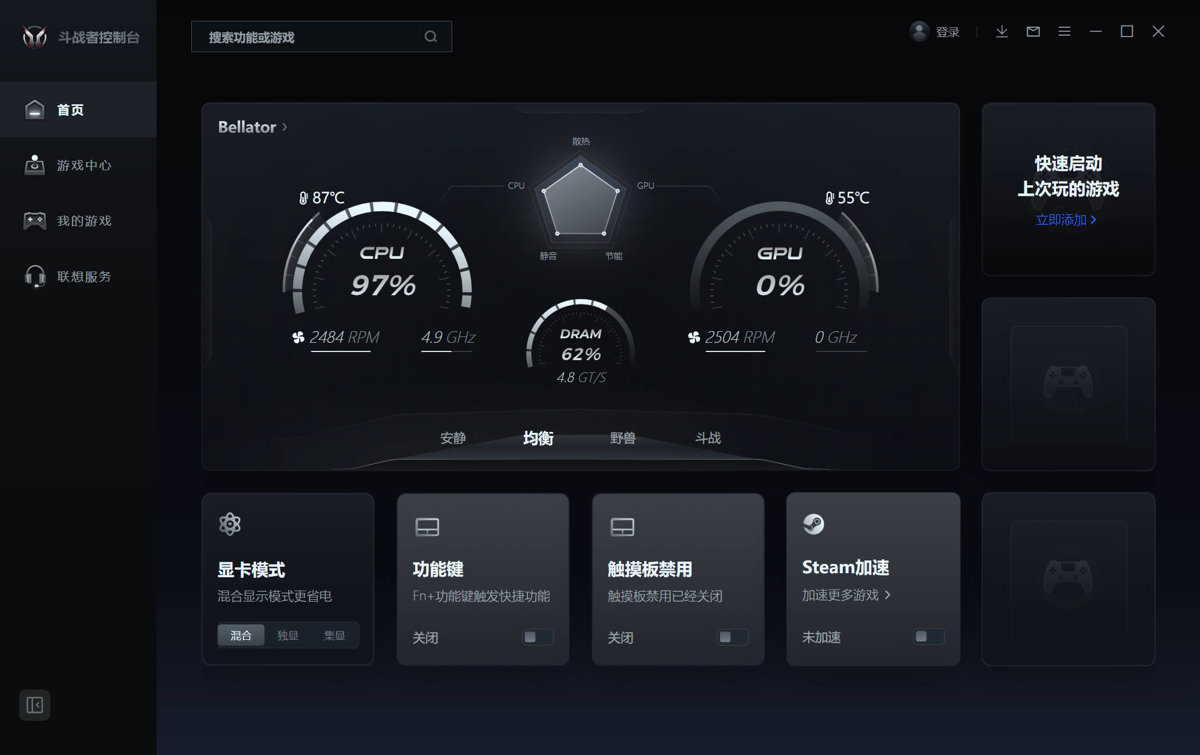
There's also a place to view info
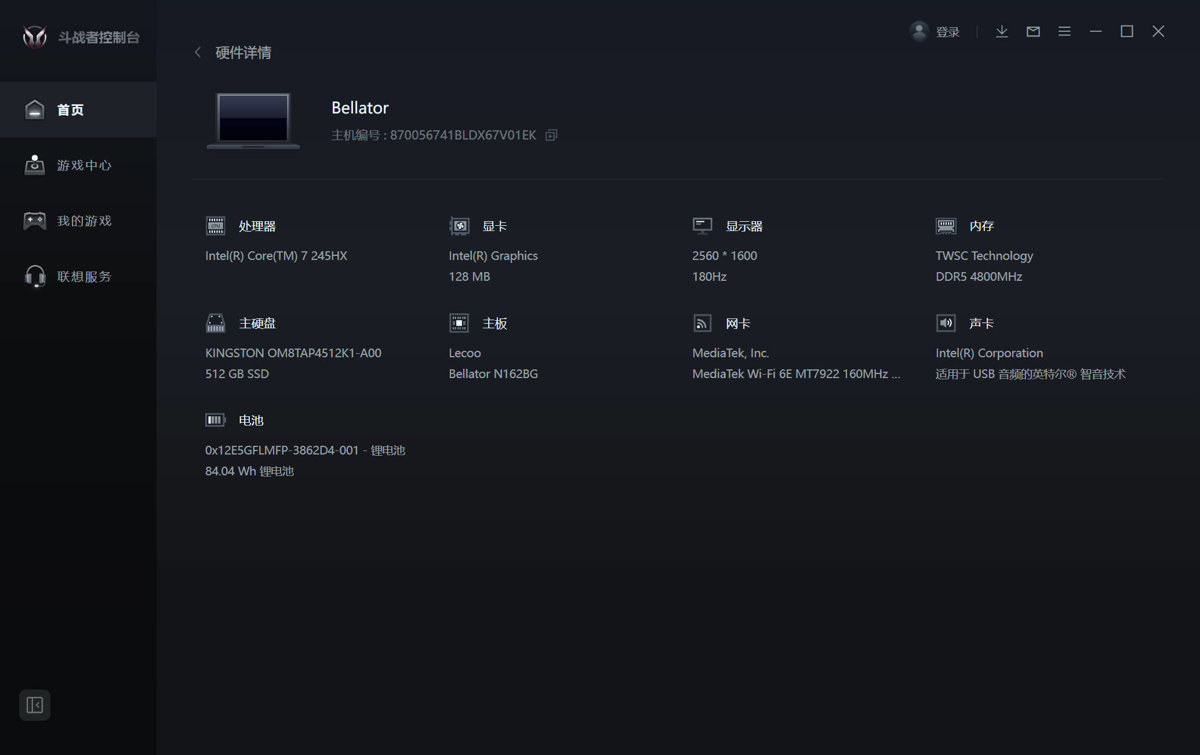
CPU-only Stress Test
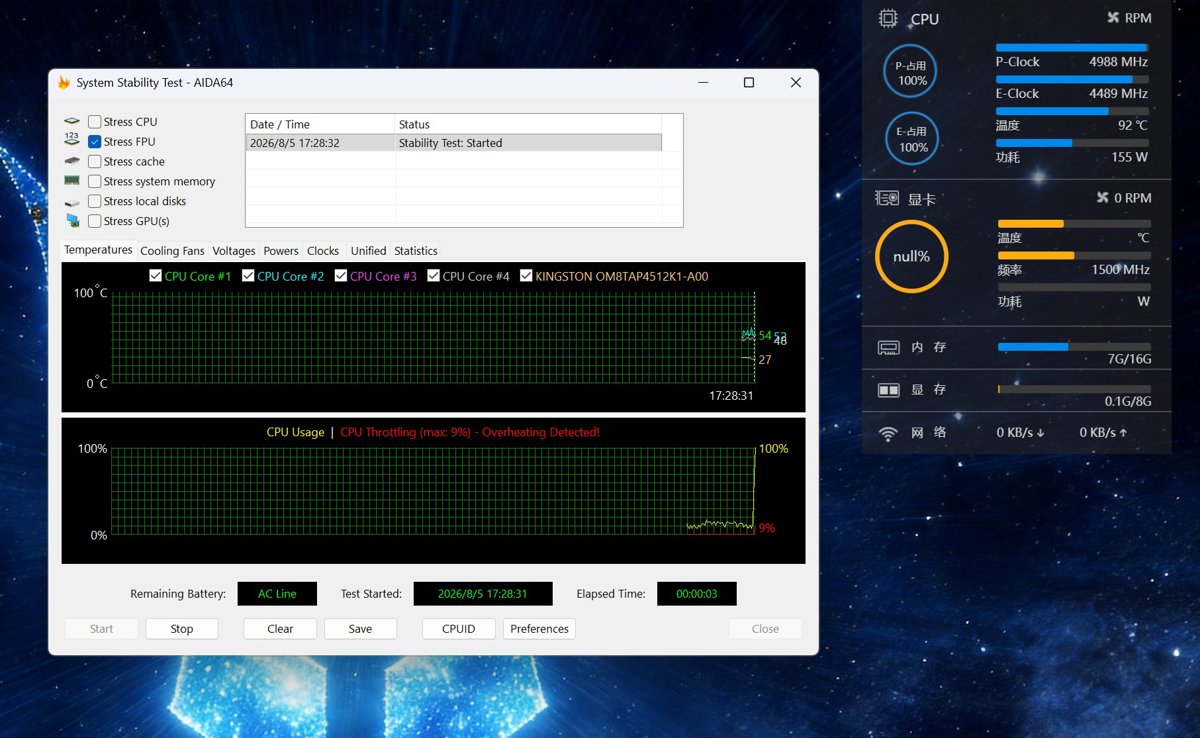
Switched the control center to Douzhan mode, set Windows performance mode to Best as well, and started roasting!
Right at the start of the CPU-only test it jumped to 155W, temperature 92°C.
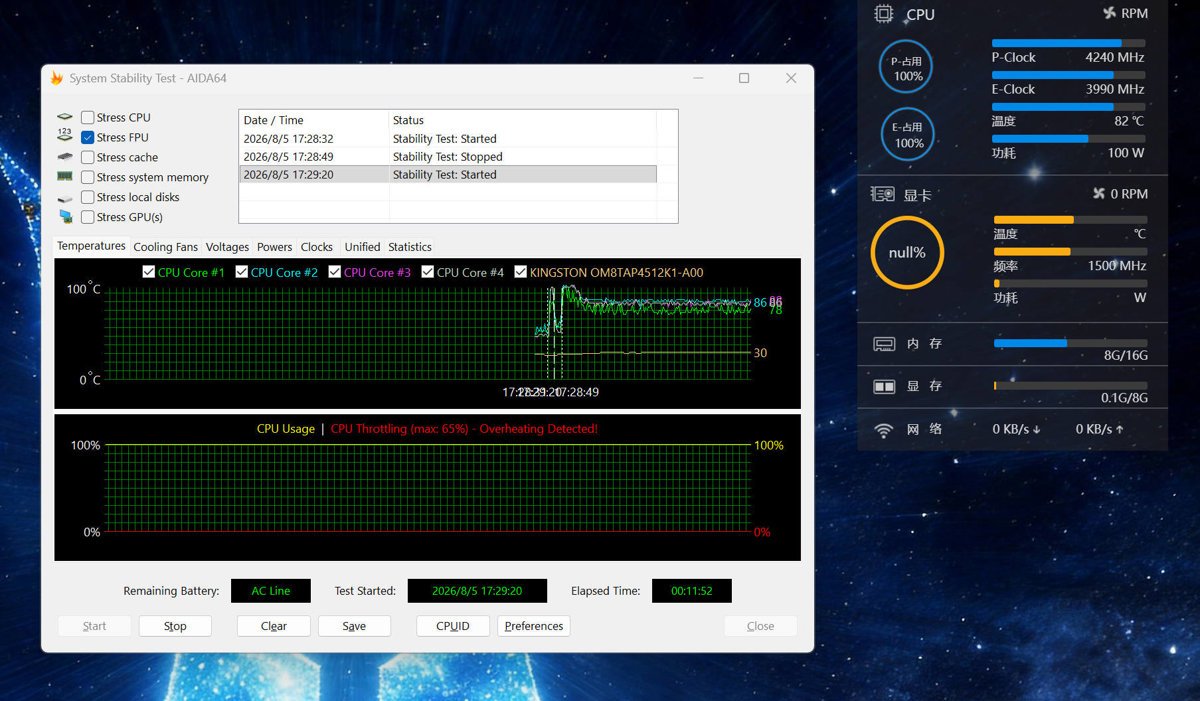
After 10 minutes of CPU-only stress, it settled at 100W, 82°C, with multiple thermal throttles in between.
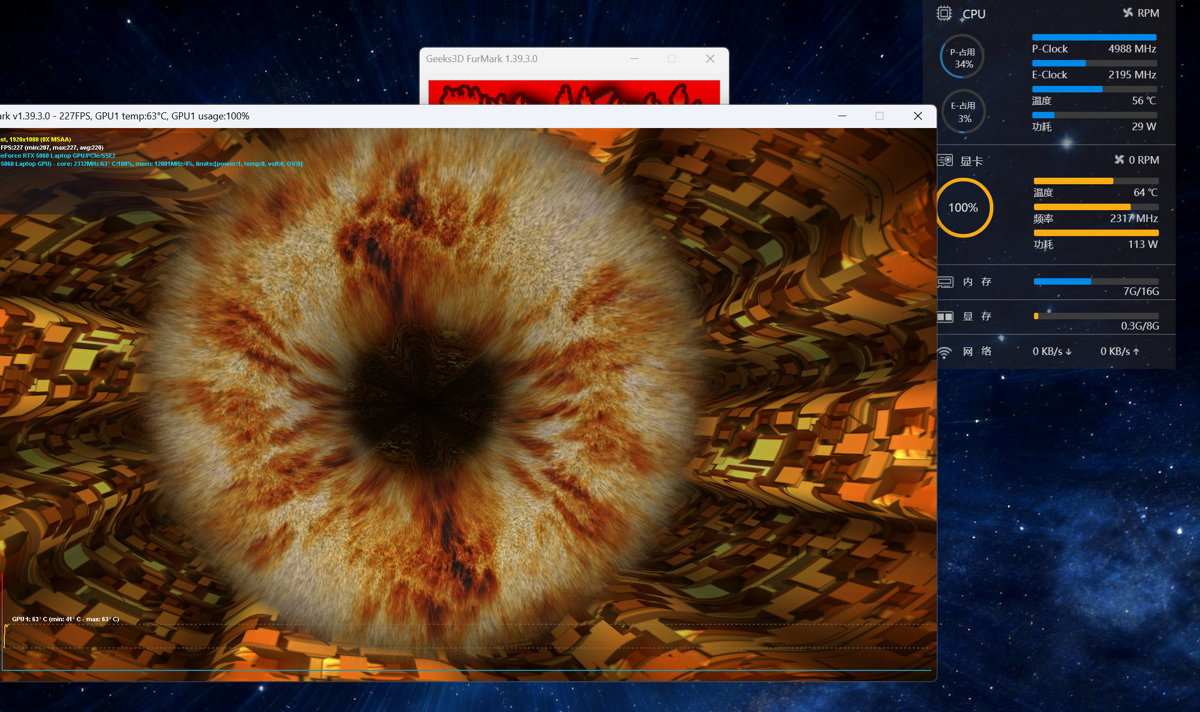
GPU-only Stress Test
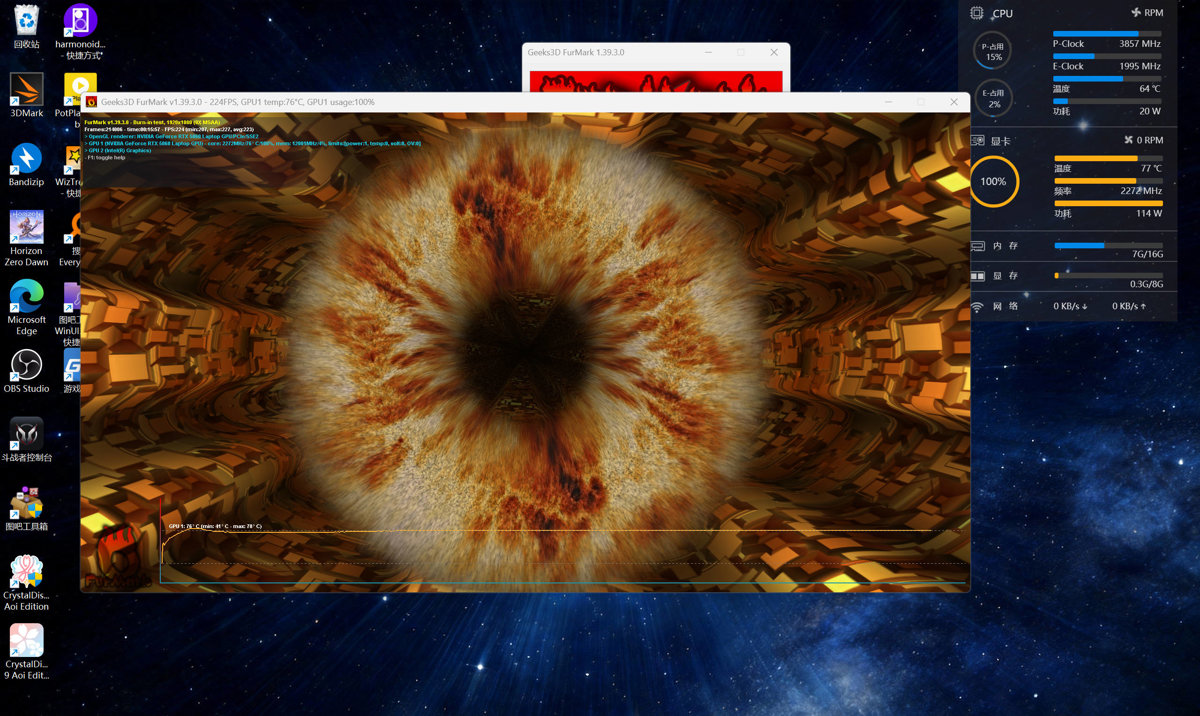
At the start, power draw 113W, temperature 64°C
After 20 minutes of GPU-only stress, power draw stabilized at 114W, temperature 77°C
Dual Stress Test
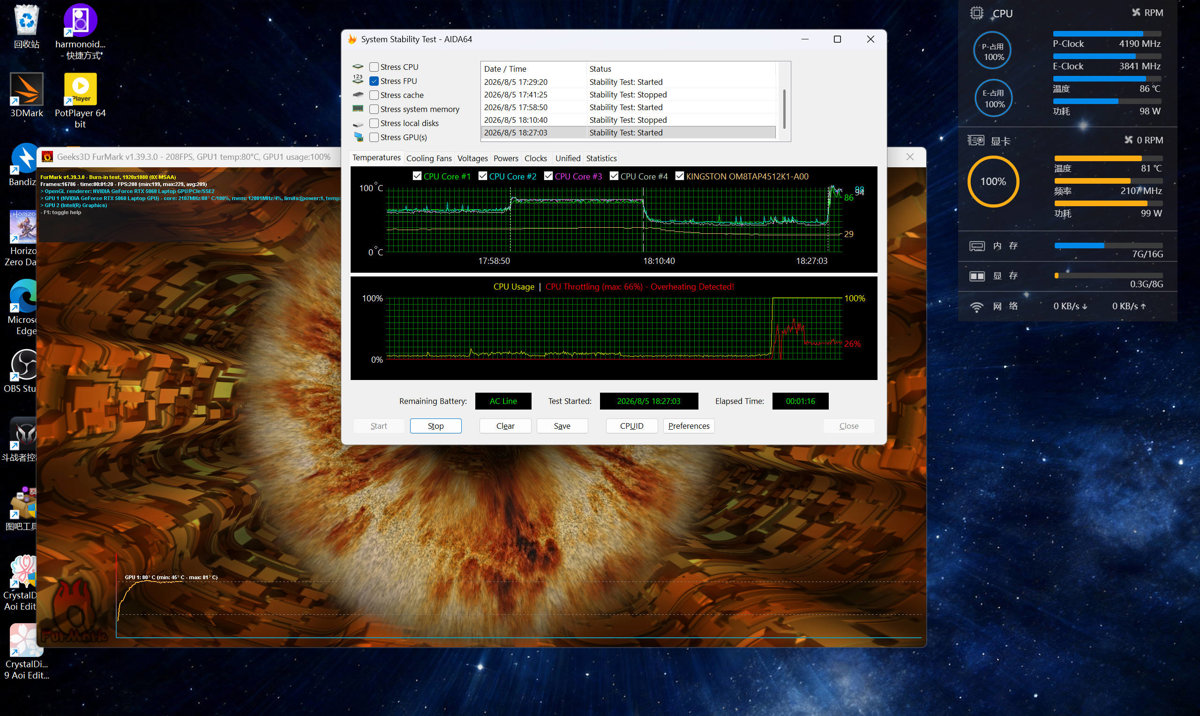
A little over a minute into the dual stress test, the CPU had already thermally throttled.
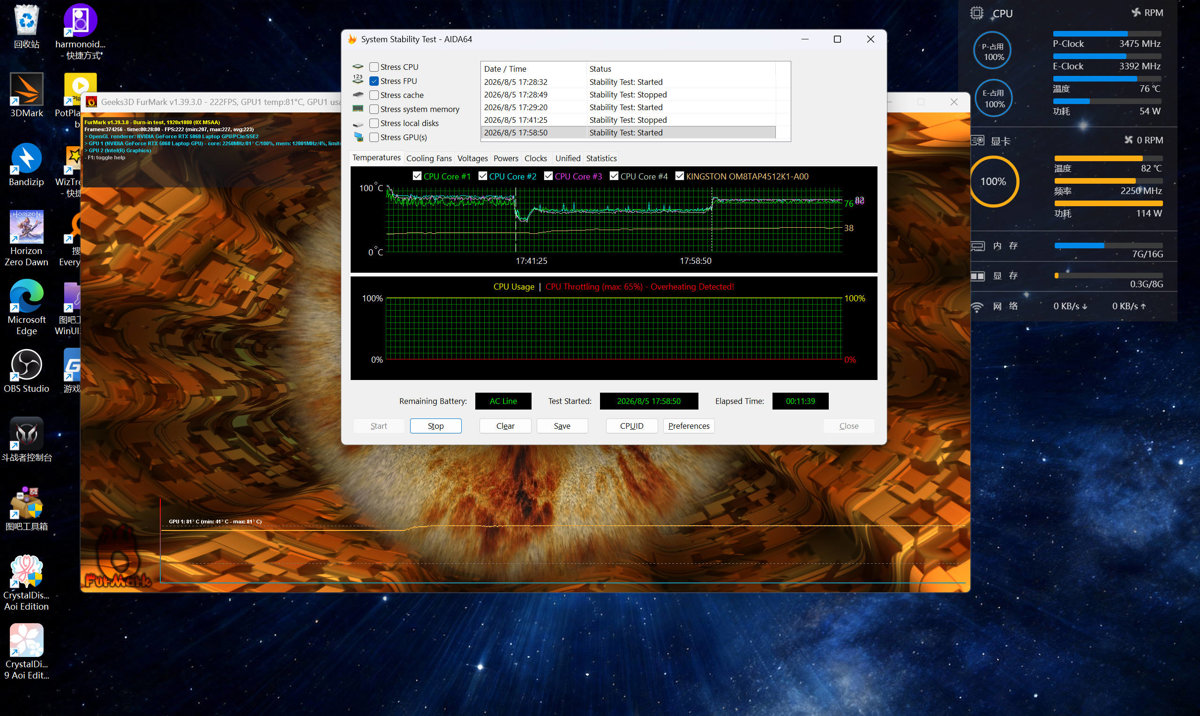
After 10 minutes of dual stress, the CPU was at 76°C drawing 54W, the GPU at 82°C drawing 114W, totaling 168W—didn't reach the officially claimed 180W power limit. Might be a bit of a miss, but it's close enough, and this performance is adequate.
Performance Tests
3D Mark
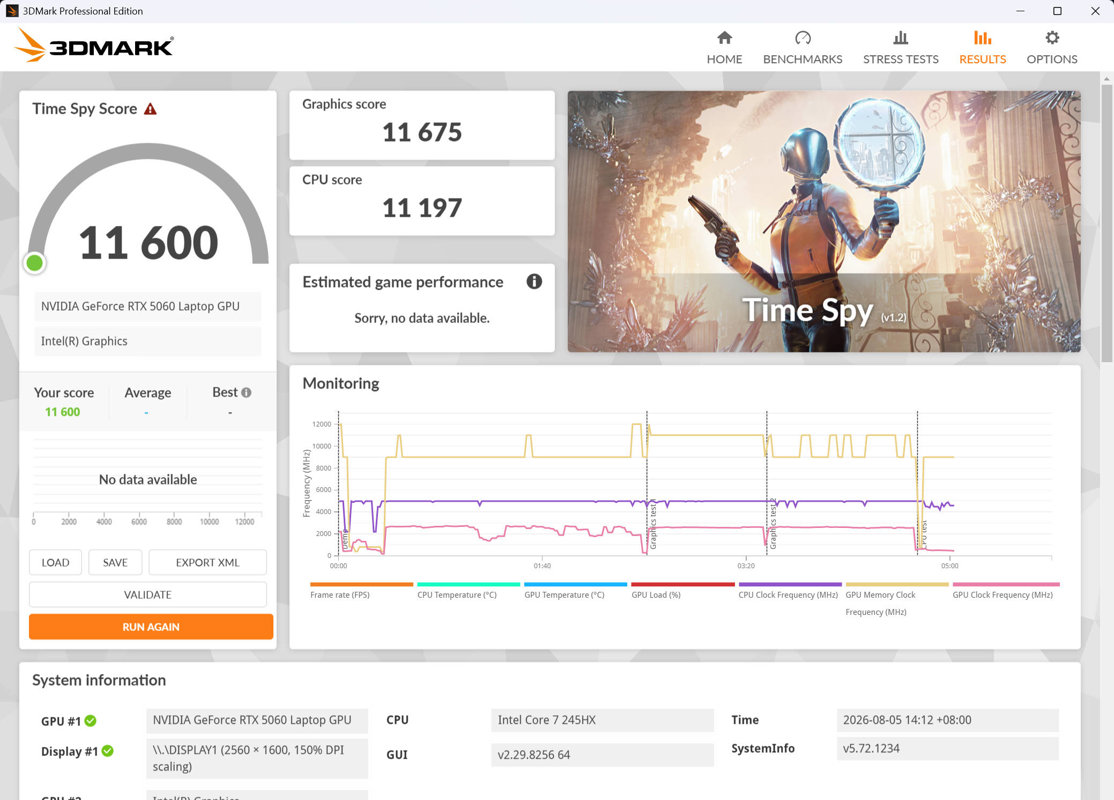
The 3D Mark scores are GPU 11675, CPU 11197. The GPU part is standard 5060 level, nothing much to say.
But the CPU part is a bit odd. Last time the TB16+'s Ultra 7 356H scored 14978—why does the supposedly stronger Core 7 245HX score a chunk lower instead? Don't tell me this unit really is a lemon?
Game Tests
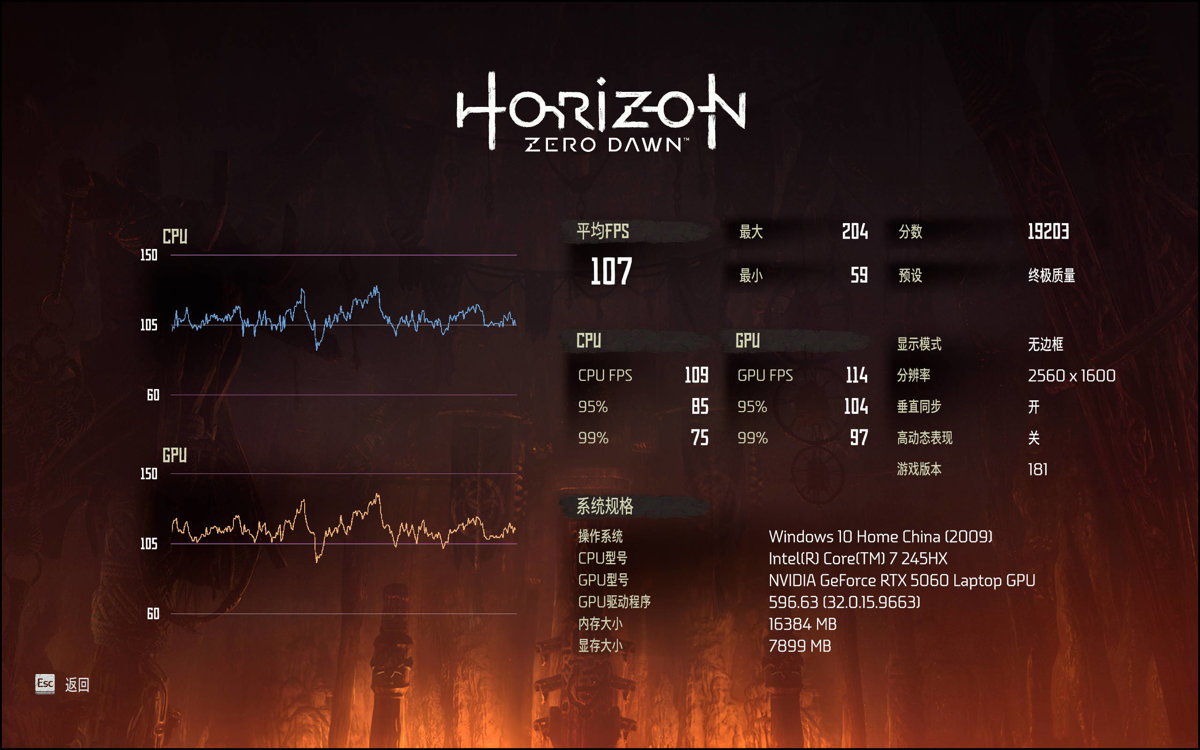
On to game testing. Bringing out the old regular, Horizon Zero Dawn—it can run 107 fps at native resolution.
Switched to Balanced mode in the control center and tested again: 105 fps.
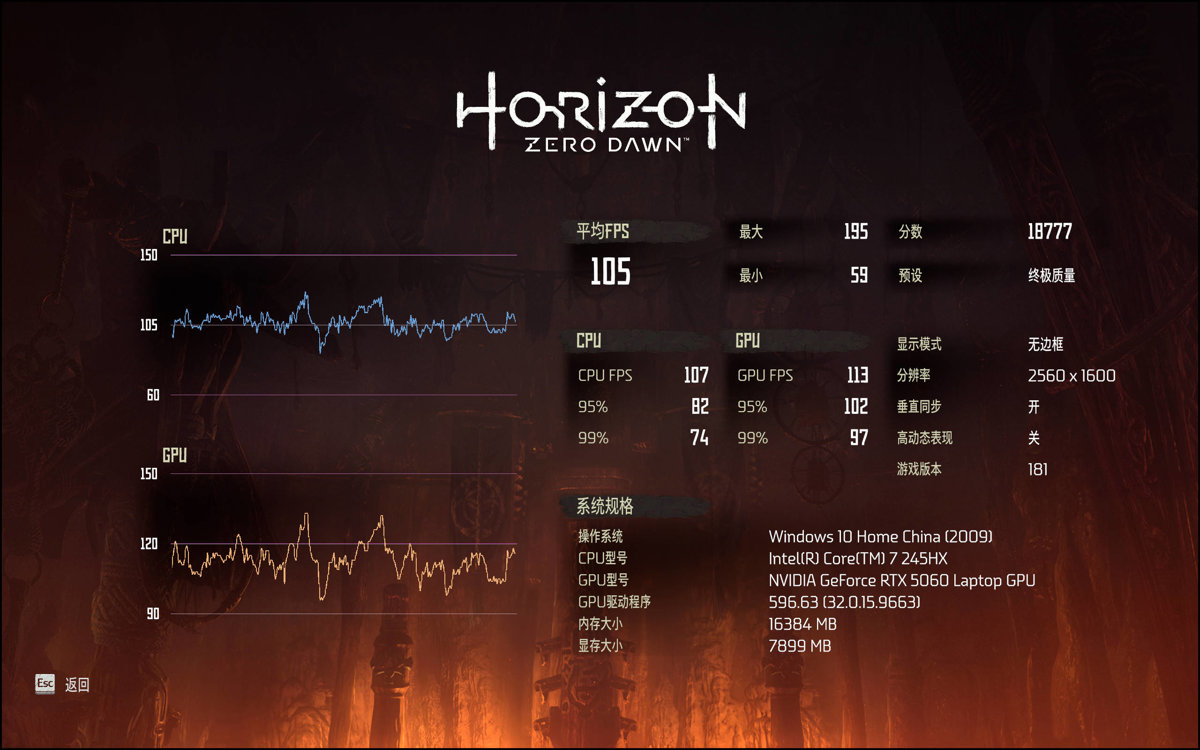
The 5060's gaming performance is fine. Horizon Zero Dawn is an older game after all, and the Douzhanzhe's GPU power delivery has no issues. What I find odd is the CPU power delivery—that might matter in some CPU-heavy online games, but I don't play those so I can't test it for now.
Wrap-up
Before buying, what I worried about most was poor build quality and a cheap feel. That didn't actually show up on this Zhan 7000X. In hand it was quite a bit better than I expected, probably because both the A and D covers are metal, so holding it doesn't feel strongly plasticky.
When using it, though, the C deck is pure plastic. Compared with the MacBook and ThinkBook 16+ I normally use, there is a definite gap, and even compared with Jige's Boundless 14X. But for normal use I'll definitely be using an external keyboard and mouse, so this isn't a big issue.
You get what you pay for, but the Zhan 7000X isn't cheap either. Even in August when laptops were all expensive, there were still plenty of 5060 gaming laptops to choose from at this price. As for being thin and light, you could also look at the TUF Air (H255 version), around 8,300 yuan on Pinduoduo, with a 32GB+1TB storage combo that's much better than the Zhan 7000X's 16GB+512GB. I discussed this with people in the community before; a lot of them pushed back that the TUF Air's H255 processor (which is actually a rebadged 7840H) is much weaker than the 245HX/251HX. But the key is the 32GB+1TB storage combo and the 5060 GPU. If you're just gaming, the two are similar enough—at this point if you can get the spec filled out, don't be picky 😅.
As of writing this it's already September 9, 2026. The Zhan 7000X is out of stock now, and the 8,300+ TUF Air is probably gone too, so just take this as a bit of fun. If you need a computer, go build a DDR4 desktop 😄. Gaming laptops are done for, and it's said this will last several years. Don't bother waiting for Double 11 or 618 either—if you need someone to blame, blame all the big capital going All in AI 😑
_EOF_
Lenovo Lecoo Douzhanzhe Zhan 7000X Late Unboxing
- 本文作者:
- 程序设计实验室
- 版权声明:
- 本博客所有文章除特别声明外,均采用 BY-NC-SA 许可协议。转载请注明出处!
相关文章
独立开发者老妖出洞 | 15寸 MacBook Air M4 迟到的开箱与碎碎念
又一台MacBook Air M4?独立开发者为了那点安静和勉强够用的性能,居然能忍受稀少的接口?15寸倒是可以,总好过拿个玩具写代码。至于Pro,性能过剩罢了。
2025-12-30 · 笔记本电脑 · 约 1 分钟
2024年我最喜欢的轻薄本模具,机械革命无界14X暴风雪开箱
鸡哥这个无界 14x 换了新的模具之后,可以算得上是我最的轻薄本模具了,1.46kg 的重量,价格与能耗比都最适合轻薄本的 8845 处理器,80Wh大电池,还有双 M2/双内存插槽,扩展性拉满,接口也非常丰富,直接就是轻薄本的高分答卷~ (为啥其他厂商不抄一波呢?)
2025-10-28 · 笔记本电脑 · 约 1 分钟
疯狂的市场行情,一万多买 5060,Thinkbook16+ 2026 独显版开箱
1.25万买个“性价比无关”的机器还要庆幸没赶上14999,这市场疯得比显卡温度还快。 2. 烤机能稳166W,3DMark显卡分1.2万,但联想把控制台塞进“百应”这种垃圾软件里——这操作比AI重绘USB口还不靠谱。 3. 屏幕和5060独显提升明显,但贴纸多到像OEM返利广告位。 4. 至于硬盘10GB/s?2242规格的PCIe 5.0,也就跑分时能颅内高潮一下。
2026-08-20 · 笔记本电脑 · 约 1 分钟
微星绝影14开箱
微星这个绝影14定位有点尴尬,作为全能本吧,不够轻,1.8kg,被天选Air的1.4kg乱杀了 作为游戏本,性能释放又不太够,特别CPU搭配的是第一代Ultra,双烤的时候有点难顶。 不过据说微星的BIOS可玩性很高,或许可以自己折腾调教一下。
2025-10-28 · 笔记本电脑 · 约 1 分钟
讨论
共 0 条加载评论中…